

Eating with your eyes
Does design have a taste? No.
But let me tell you how I see it.
Eating, or better said, the ritual of “sitting down to eat,” is a multisensory experience, and the design surrounding the food itself (from the sign you see outside a café, the interior design, the tableware, the plating, the packaging and even the typefaces on a menu) has a direct impact on how I perceive what I put in my mouth.
Let’s play a game.
Say you own a restaurant, and the business is split into 3 big modules.
- Quality of the food
- Atmosphere / overall design
- Quality of the service
Of these 3 items, there’s one you know for sure is going to fail at your restaurant.
Which one would you choose to fail?
In my case, I think the quality of the food is non-negotiable. It’s the substance that gives meaning to everything else.
The atmosphere / overall design, to me, directly affects how I perceive what I’m eating. It adds (or takes away) value from item 1, but I also see it as a bridge (I’ll explain in a moment).
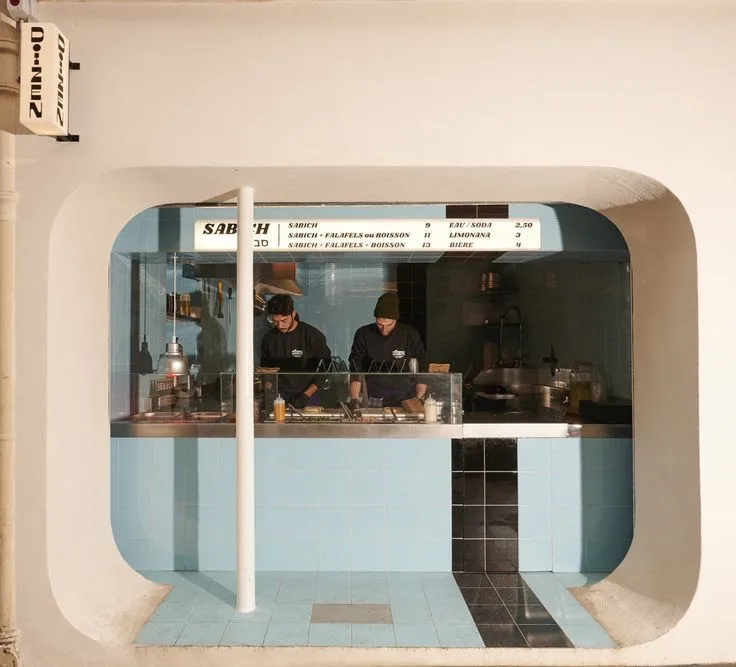
So this leads me to think that if I had to give up one module, I’d give up the quality of the service. At the end of the day, if I eat exceptionally well in a place where the atmosphere is ideal, aesthetically harmonious, makes me want to stay and is pleasant, I don’t care that much if they take a while to serve me, or if the person serving me is unfriendly.
I know this is very personal and completely subjective. I have plenty of friends who don’t care where they eat or what the menu looks like, as long as they’re treated well and the dish that reaches the table is exquisite.
I don’t think there’s a right answer to this dilemma. However, design has the “advantage” (a double-edged sword) of engaging your senses before you get to taste the food or experience the service. Design gives you, first and foremost, a chance.
To end up sitting somewhere, you first had to browse a website or see a photo on Instagram, and based on what you saw, you decided whether to book or not.
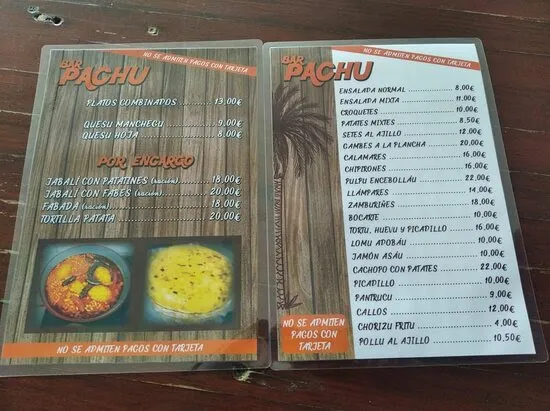
Or say you’re traveling and choosing a place comes down to what you see as you walk past the door: the menu, a dish going by on a tray, or how the tables are set. If you like it, you pick it. The food may be good or bad. So may the service, but design always came first. Take the photo above, for example. If you had browsed Bar Pachu’s website, or come across that menu, what are the chances you’d have chosen it? Prejudice? Maybe.
This isn’t an attack on those typical, traditional, old places that don’t even get the chance to consider the question of “design or no design.” You get what I mean.
What I want to leave as a conclusion is that no matter the level of the place itself (it could be fine dining or a takeaway you eat standing up on the street), design tends to give you a chance before any other element. And I think this applies to many industries.
Even if design has no taste, I think our food culture is closely tied to how we experience and enjoy the ritual of eating.